
Clinical trials
Find cancer clinical trials that may fit your diagnosis
See cancer clinical trials that may fit your diagnosis, based on your reports, with each trial explained in plain words and questions to ask your doctor.
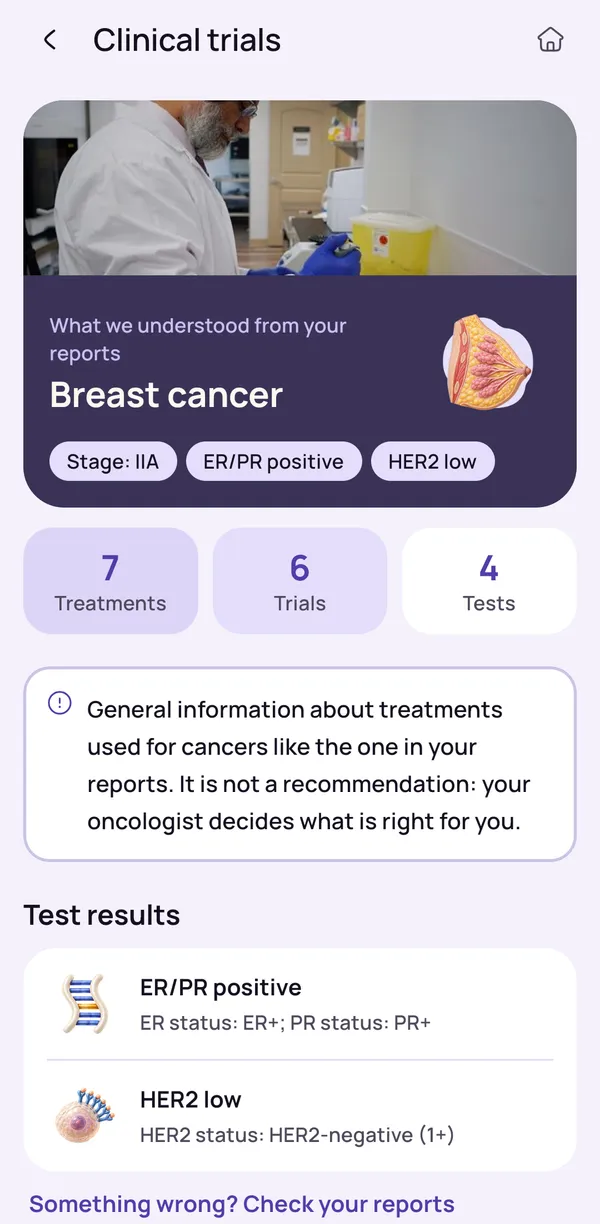
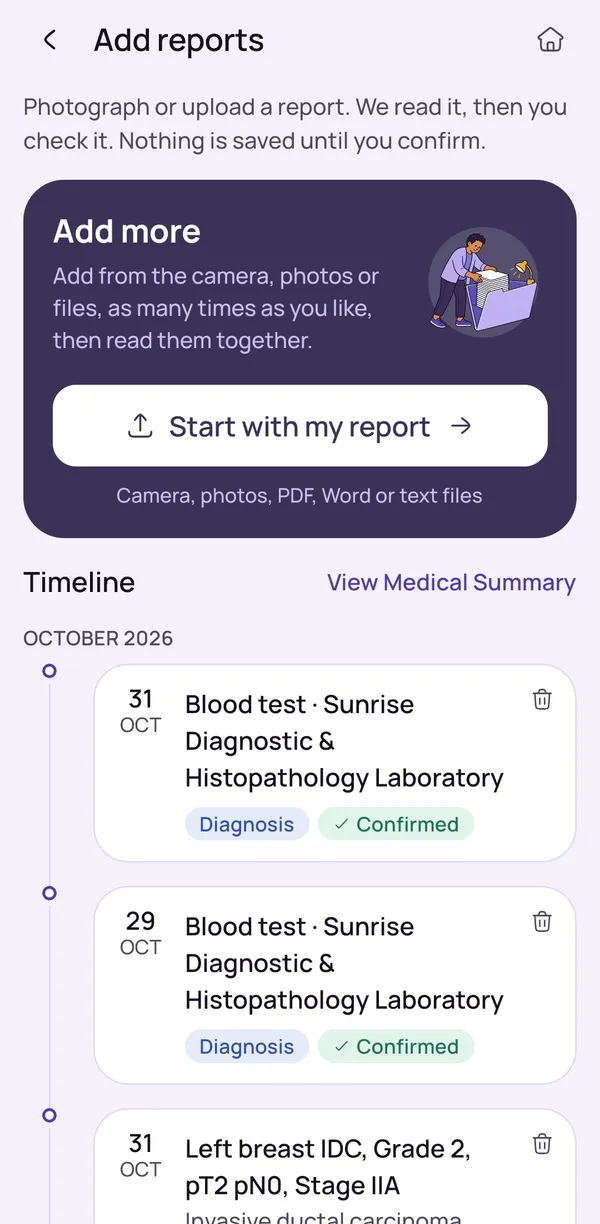
How trials are linked to your reports
You add your reports with the camera, photos, a PDF, a Word file or a text file. The app shows what it read, and you check the details before anything is saved. It then compares what your reports say about your cancer with a reviewed list of clinical trials, and shows the ones that may fit.
The app does not use your phone's location, so there is no search by place. It is also not a full public database of every cancer trial in the world, so a trial may exist that the app does not show.
Trials change over time and each has its own rules. Treat the list as a starting point for a conversation with your oncologist, not an answer.
- Matched to your confirmed reports, not your location
- A reviewed list, not every trial in the world
- Trials change, so confirm details with the trial team
What each trial is testing
For each trial that may fit, the app explains in plain words what is being studied and which kind of cancer it is meant for. Tap a hard word to see a short, simple explanation, or use the Listen button to hear the text read aloud.
In a trial, the treatment or approach is still being studied, so its benefits and side effects may not be fully known. That is why the trial team has to explain the study to you in full before you decide.
The aim is to help you understand the trial well enough to ask good questions. It is not advice to join or to avoid it. Ask your oncologist how the trial differs from your current plan.
- What is being studied, in plain words
- Which kind of cancer the study is for
- Tap a term, or listen aloud
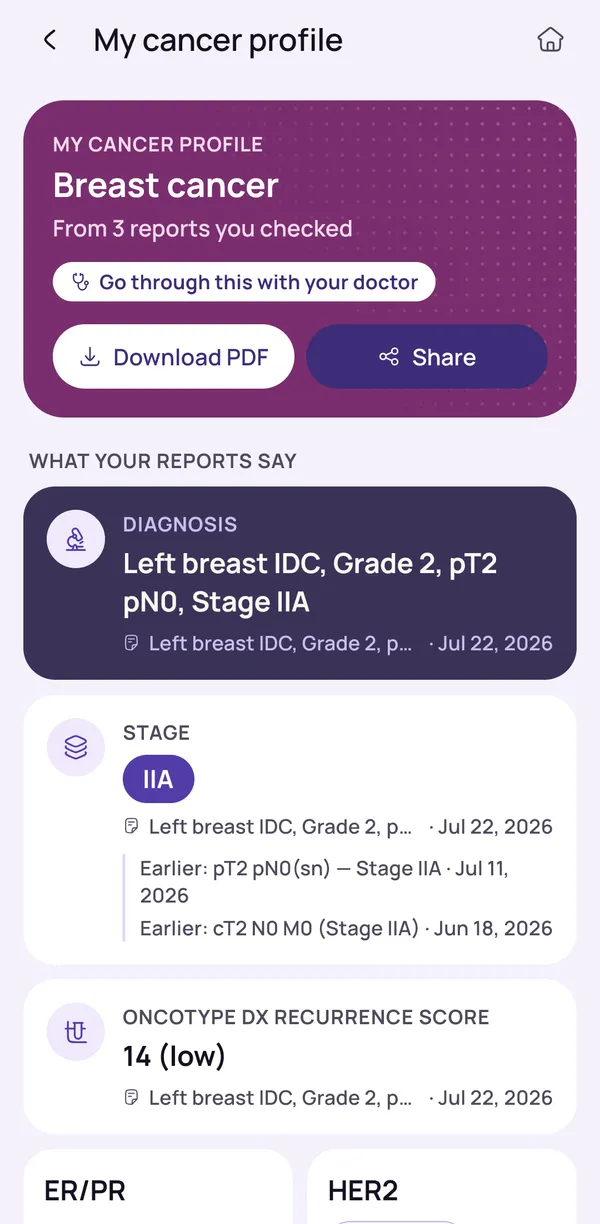
Who can join: eligibility in plain words
Every trial has rules about who can take part, such as the type and stage of cancer, earlier treatment, test results and general health. May fit does not mean eligible. It means something in your reports looks similar to what a trial is looking for.
Some details may be missing from your reports or may have changed since the report was written. Your cancer profile shows which report each detail came from, so you can check it. Adding the biopsy or pathology report, scans and any marker tests gives the app more to work with.
The trial team checks these details with its own forms and tests. Do not take a missing result to mean that a trial is out of reach.
- The trial team checks with its own forms and tests
- A trial not shown does not mean nothing exists
Talking to your doctor about a trial
Bring the trials to your oncologist, who knows your full history and can tell you whether any trial is worth discussing further. Start with the basics: why might this trial be relevant, and how does it differ from the treatment you have now?
Also ask what is being compared, what side effects are known so far, what happens if you decide to leave, and who to call if you feel unwell. If the trial is in another city or country, ask about travel and stay early.
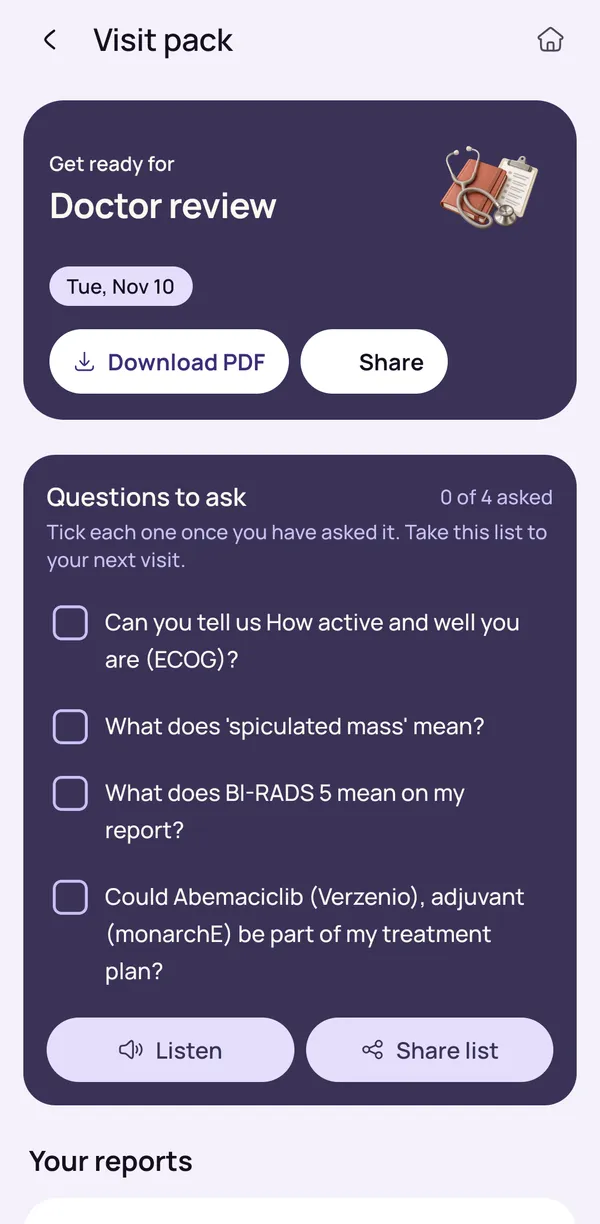
The visit pack gives you a short list of questions for your next visit. You can tick them off, listen to them, download a PDF or share it with family, and add trial questions of your own.
- Why might this trial be relevant to me?
- How does it differ from my current treatment?
- How many visits and tests are needed?
- Who looks after my day-to-day care?
Your doctor and the trial team decide
OncoVOIS does not diagnose or recommend treatment, and it never tells you to join a trial. The trial team decides whether you meet the rules, your oncologist advises you, and you decide whether to take part. OncoVOIS and CancerFax do not decide this.
If you are suitable and wish to join, the trial team explains the study, including possible risks, and asks you to read and sign a consent form. You can ask questions, take your time and bring a family member. Clinical trials in India follow national rules and need ethics committee approval.
If you feel very unwell, do not wait for the app: call your hospital or 112 (ambulance 108).
- A suggestion never means a place is certain
- You can ask CancerFax's senior specialists to review your reports
Keep reading
Read more
Plain-words guides on this topic, for patients and families.
Frequently asked questions
How does OncoVOIS find cancer clinical trials that may fit my reports?
You add your reports with the camera, photos, a PDF, a Word file or a text file. The app reads them and shows what it found, and you check the details. Nothing is saved until you confirm. Once your reports are confirmed, the app compares what they say about your cancer with a reviewed list of clinical trials and shows the ones that may fit.
Each trial is explained in plain words, so you can see what it is studying and why it was shown to you. This is a starting point for a conversation, not an answer. Trials change over time and each has its own rules, so only the trial team can say whether a place is open to you. Bring the list to your oncologist, who knows your full history and can tell you whether any trial is worth discussing further. The app never tells you to join one.
What does "may fit" mean for a cancer clinical trial in the app?
"May fit" means that something in your reports looks similar to what a trial is looking for. It does not mean you are eligible, and it does not mean you should join. The app says "may fit" and never "eligible", because eligibility is decided by the trial team.
Every trial has rules about who can take part. These often include the type and stage of cancer, earlier treatment, test results and general health. Some of this information may be missing from your reports, or may have changed since the report was written. The trial team checks these details with their own forms and tests. So treat a trial that may fit as a reason to ask your oncologist a question, not as a promise. A trial that the app does not show also does not mean nothing is available for you. Your oncologist can tell you more.
Can I find cancer clinical trials in India with OncoVOIS?
OncoVOIS matches your reports to a reviewed list of clinical trials and shows the ones that may fit. Whether a particular trial is running in India or in another country depends on that trial, so check the details shown for each one and then confirm with the trial team.
It helps to know that clinical trials in India follow national rules and need approval from an ethics committee, which is an independent group that checks that a study is fair to the people who take part. The trial team explains the details to anyone who is considering joining, in a language the person understands. If a trial is in another country, the trial team can explain what that would involve. All of this is worth discussing with your oncologist first. The app shows trials as something to discuss, never as a recommendation.
What will the app tell me about what a trial is testing?
For each trial that may fit, the app explains in plain words what is being studied and which kind of cancer the study is meant for. Hard words are explained, and you can tap a term to see a short plain explanation. You can also use the Listen button to hear the text read aloud.
The explanation is meant to help you understand the trial well enough to ask good questions. It is not advice to join or to avoid it. In a trial, the treatment or approach is still being studied, so its benefits and side effects may not be fully known. That is why the trial team has to explain the study to you in full before you decide. Ask your oncologist how the trial differs from your current plan. If you are unsure about a word or a detail, ask in the app or ask the trial team directly.
Can I search for cancer clinical trials near me on OncoVOIS?
OncoVOIS does not use your phone's location, so there is no "near me" search. Instead, it matches a reviewed list of trials to what your reports say about your cancer. This also means it is not a full public database of every cancer trial in the world, so a trial may exist that the app does not show.
Where a trial is running, and how often you would need to visit, is part of what the trial team explains. Travel can matter a great deal for families, so ask about it early. The app also shows CancerFax partner hospitals that treat your type of cancer, by country, with a way to message the CancerFax team on WhatsApp. Whether you take part in a trial near home or far away is a decision for you, your family and your oncologist, together with the trial team.
What should I ask my oncologist before considering a clinical trial?
Start with the basics: why might this trial be relevant to my situation, and how does it differ from the treatment I have now? Then ask what is being compared, what side effects are known so far, how many visits and tests are needed, and who will be in charge of my day-to-day care.
Also ask what happens if you decide to leave the trial, how the trial team and your own oncologist will share information, and who you should call if you feel unwell. If the trial is in another city or country, ask about travel and stay. The app's visit pack gives you a short list of questions for your next visit that you can tick off, listen to, download as a PDF or share with family, and you can add trial questions of your own. Your oncologist knows your history and can help you decide whether to ask the trial team about a place.
Who decides whether I can join a cancer clinical trial?
The trial team decides whether you meet the rules of the trial, and you decide whether you want to take part. Your oncologist advises you, because they know your history. OncoVOIS and CancerFax do not decide this.
To check the rules, the trial team usually reviews your records and may ask for further tests. If you are suitable and wish to join, you will be asked to read and sign a consent form after the team has explained the study, including possible risks and what is expected of you. You can ask questions and take time, and you can bring a family member. A suggestion in the app never means that a place in a trial is certain. If the trial team says you cannot join, that is about the rules of that one study, and your oncologist can talk through what other options may be worth discussing.
What if my reports are missing details that a trial needs?
The app can only work with what is in the reports you have added. If important details are missing, it may show fewer trials, or ones that are less precise. The app says when it is not sure and asks you to confirm details, and your cancer profile shows which report each detail came from, so you can check it.
Many trials ask for specific test results. Adding every relevant report, such as the biopsy or pathology report, scans and any marker tests, gives the app more to work with. If a test has never been done, your oncologist can tell you whether it is relevant to your situation. Do not take a missing result to mean that a trial is out of reach. The trial team may ask for further tests of their own. Before any decision, check the details with your oncologist.
Can a specialist review my reports before I discuss a trial?
Yes, you can ask CancerFax's senior cancer specialists to review your reports. Your own doctor stays in charge of your care, and the review is meant to support your conversations, not to replace them.
This may be useful if you want a second set of eyes on your reports before you go back to your oncologist, or if you want help preparing your questions about a trial. It is not a decision about whether you are eligible for a trial. Only the trial team can say that, after checking their own rules and tests. Whatever the review says, please keep your oncologist informed, and share the trial details with them so that they can take part in the discussion. If you feel very unwell at any point, contact your hospital or call 112, or 108 for an ambulance, and do not wait for the app.
This page is general information, not medical advice. OncoVOIS explains and helps you prepare; your oncologist decides about your care.